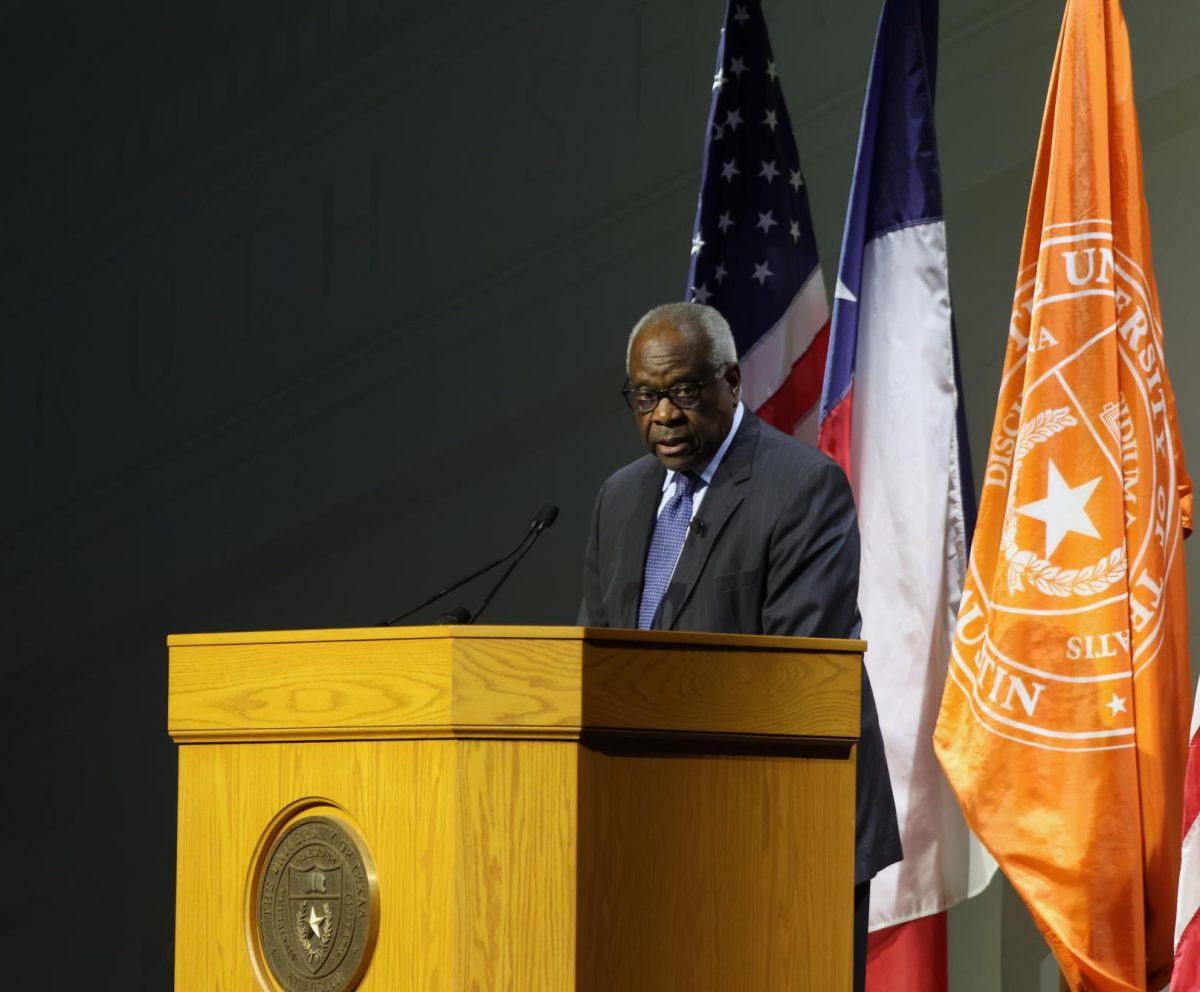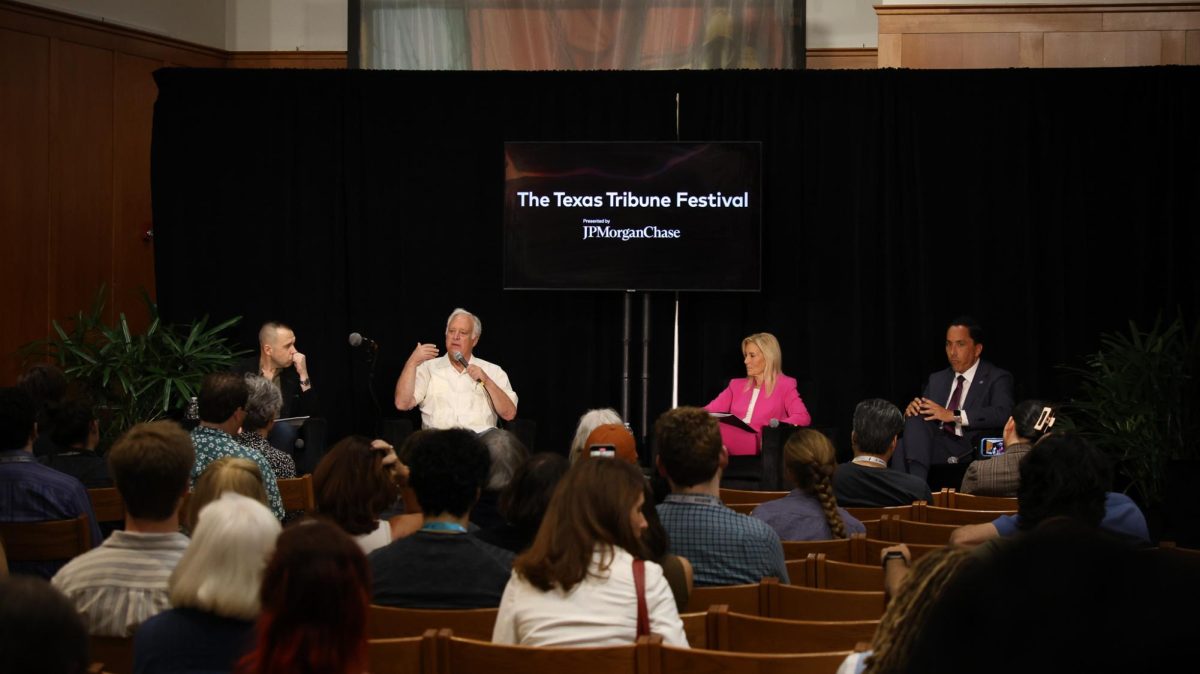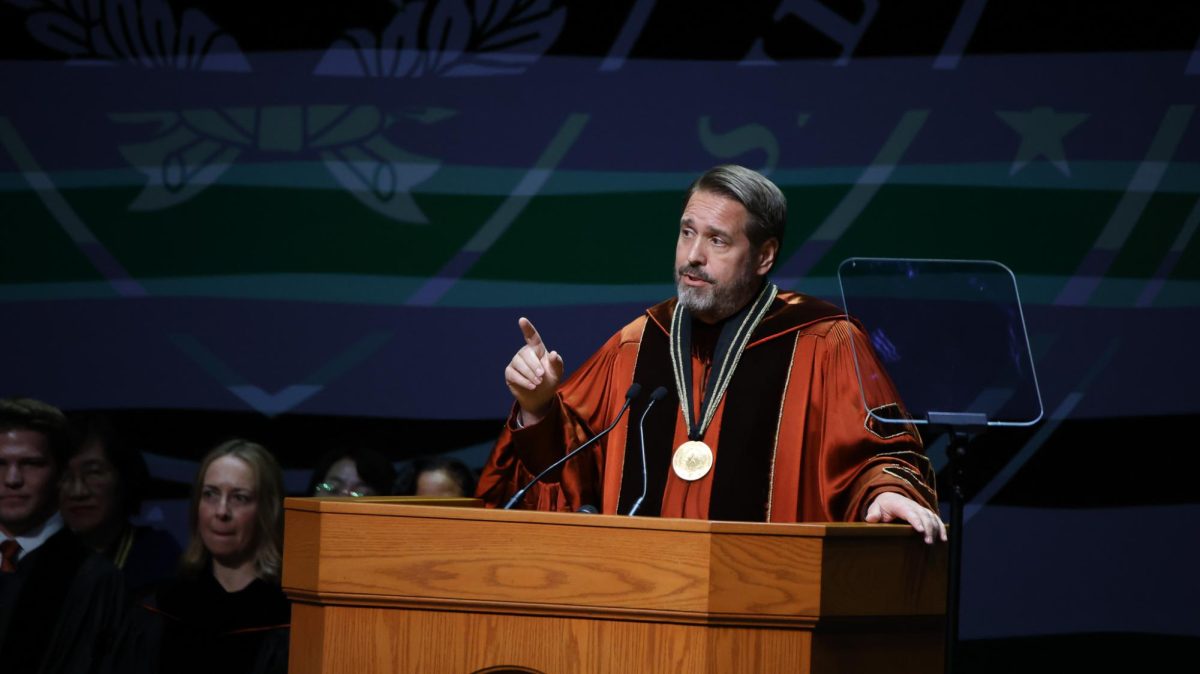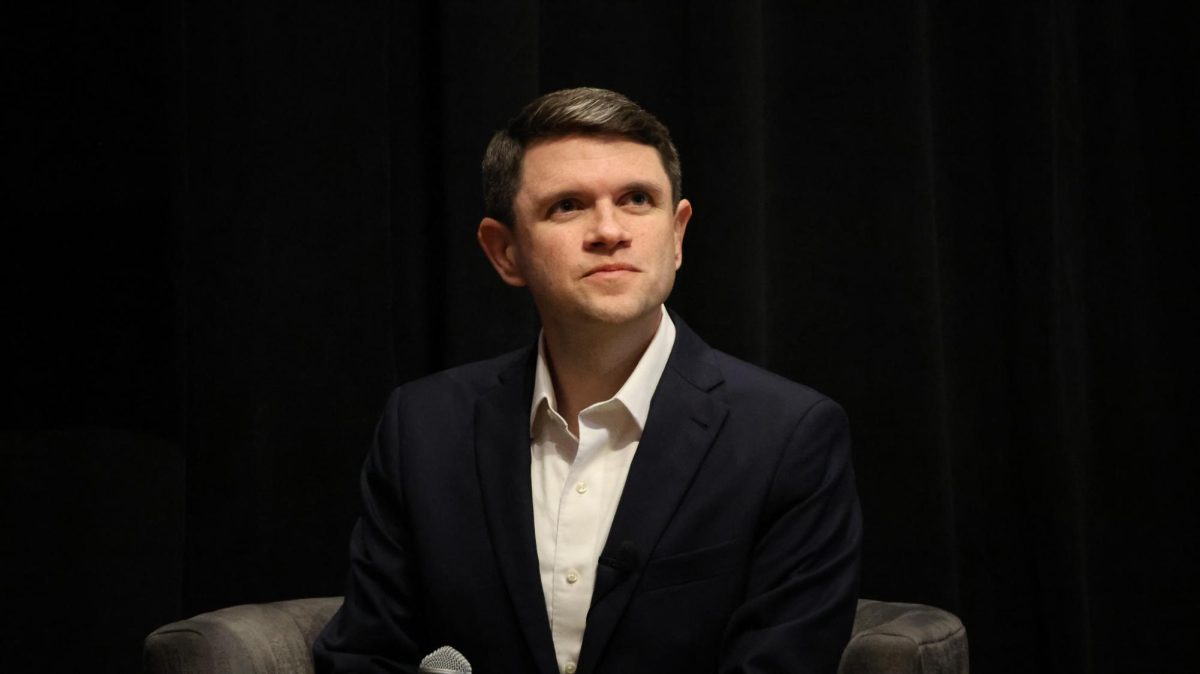

Former University of Texas President Jay Hartzell spoke at the Texas Tribune Festival Thursday, addressing the university’s elimination of diversity, equity and inclusion policies and its adoption of Senate Bill 37.
Hartzell announced his decision to leave UT in January to become president of Southern Methodist University in Dallas. He received heavy criticism following his response to pro-Palestinian protests on UT’s campus in April 2024. Evan Smith, co-founder of the Texas Tribune, pressed Hartzell on the subject and other recent changes on campus.
Hartzell said he made the switch to SMU because he sees it as a successful institution. He said he values its intimate size and location in the heart of a big city.
“It’s been the right change at the right time,” Hartzell said.
Smith said demand for students to attend SMU has largely increased since previous years. He said there was a 56% increase in admission applications and a 63% increase in transfer applications.
“I only wish I’d been hired a little bit earlier so I could take credit,” Hartzell said. “My announcement was too late to have driven that number.”
Smith shifted the conversation to the federal government’s interest in higher education, addressing President Trump’s Compact for Academic Excellence in Higher Education. This document was sent to nine universities across the country. All have declined the proposal except for UT.
“Would you sign?” Smith asked.
Hartzell said he hasn’t looked deeply enough into its tenants to know where he stands.
“One (provision) that stands out that I’d have to think hard about is not increasing tuition for five years. That’s not our model,” Hartzell said. “We are a tuition-driven place.”
Smith said SMU has a $93,000 tuition rate for students living off campus. Hartzel said three-fourths of SMU students have some sort of financial aid support, calling the high tuition rate a “sticker price.”
After asking Hartzell about his hopes for the future of SMU, Smith asked the former president what he thought he did well during his time at UT and what he wished he could have done differently.
Hartzell said his first year was somewhat tainted because he began his term during the COVID-19 pandemic. He also said the scariest part was the widespread controversy over UT’s school song, “The Eyes of Texas.”
While the song is still sung at all UT sporting events, it was brought into the spotlight when students called out its potentially racist history. Hartzell said he was proud of how he handled the controversy.
“We formed a group to research the song and really delved into it, and it turned out most of the stuff that people thought were problematic were not,” Hartzell said. “It’s more of the history of the university, history of the South.”
While he did not elaborate on the issue, Hartzell also said he wished he had done a better job at launching UT’s School of Civic Leadership.
“We took money before the idea was fully baked. And so people perceived it as, kind of, something that was not meant to be because the idea wasn’t formed yet,” Hartzell said.
The conversation shifted gears again as Smith highlighted how Hartzell’s presidency coincided with an extremely political period in America, not the least of which was the elimination of DEI policies under state law.
Hartzell said the university handled the elimination in two steps and the second one was more harmful than the first.
“Our focus initially was to comply with the law,” Hartzell said. “Then in the spring, it became clear that we had to do more.”
Hartzell said this was when the university began removing people from their positions.
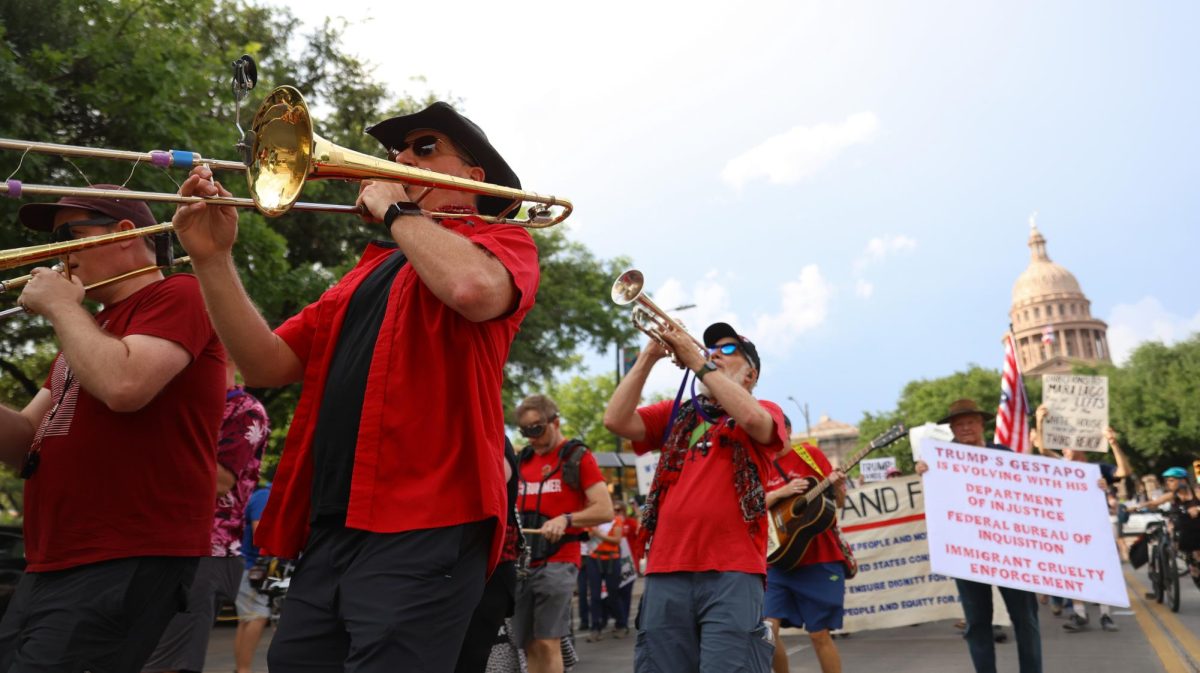
Smith circled back to Hartzell’s time at UT, asking him specifically if he would have handled the April 2024 protests any differently. 136 students were arrested over two days of protests and all charges were later dropped.
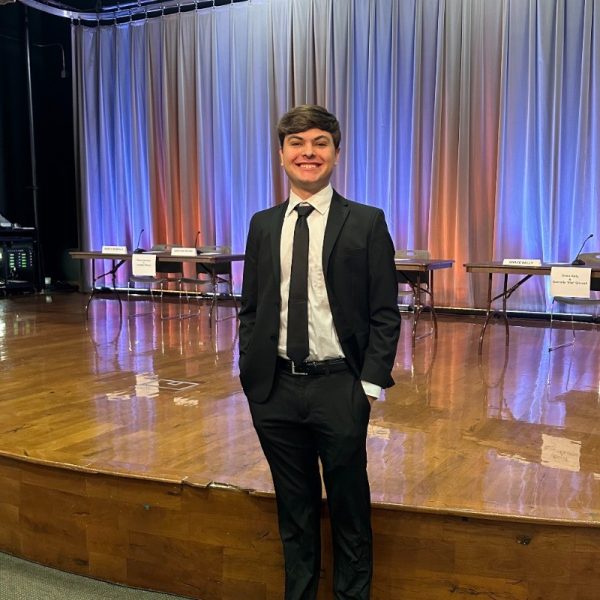
As someone with friends involved in the April 2024 protests, Spencer Terry, UT senior and member of University Democrats, asked Hartzell about his reaction.
“When you mentioned what you did well, you mentioned ‘The Eyes of Texas’ and seeing people sing it and how it made you tear up,” Terry said. “Some of my friends were tearing up when the police tear gassed them in response to a peaceful, pro-Palestine protest.”
Hartzell acknowledged communication could have been better throughout the process, but he still stands firm in his decision to call in city and state law enforcement.
“I respectfully stick to my point,” Hartzell said. “I think it was our job to enforce the rules we had, protect the students (and) minimize disruptions.”
To wrap up his conversation on politics, Smith asked Hartzell about the passage of SB 37 into law. The bill requires universities to review core curriculum—something that some students and faculty say limits their constitutional freedoms.
Hartzell said he has not read the bill, seeing as it was passed into law after he knew he would be moving to lead SMU, which is not impacted by the policy.
As Hartzell looks to the future, he is optimistic about his time at SMU.
“Why not SMU as that next great private university?”